
Cut Spark runtimes in half.




Apache Spark deserves better than the JVM interpreter.
Xonai is the compiler engine that unlocks the full performance of your existing hardware.
All without platform lock in, changing data pipelines, or re-writing code.
Unlock your hardware
Do more
with every core
MLIR JIT compiler
Xonai's compiled, not interpreted. No middle layer, no wasted cycles.
In-process execution
All your APIs, libraries, and job logic remain exactly the same, just faster.
Compute or memory?
Reduce execution time, or reduce memory pressure - your call.
Adoption without disruption
No rewrites,
no migrations
Plug-and-play
Add the Xonai JAR like any standard Spark plugin and switch it on with one flag.
Production grade
Maintain full control and revert to default Spark anytime.
No learning curve
No new dashboards, syntax, or operational rituals. Same Spark, minus the wait.


--jars xonai-spark-plugin.jar
--conf spark.plugins=com.xonai.spark.SQLPlugin
...
Beyond performance
Turn efficiency
into revenue
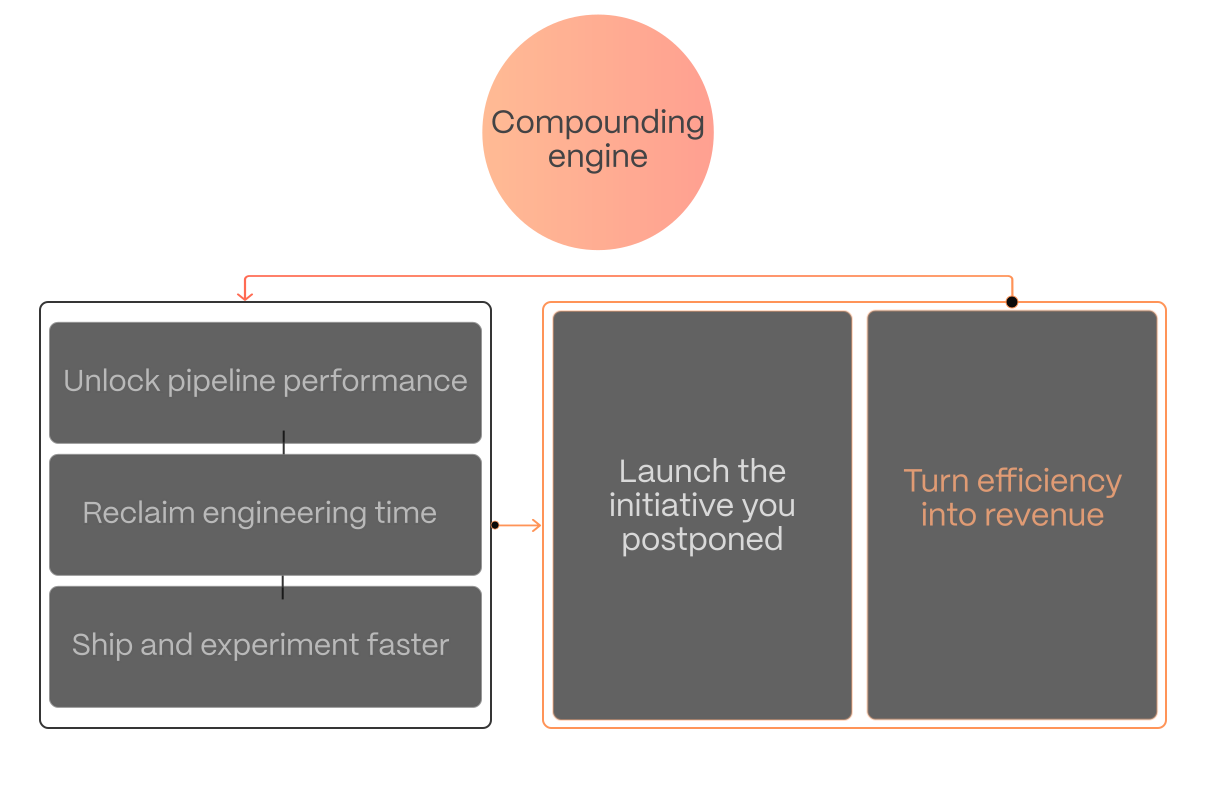
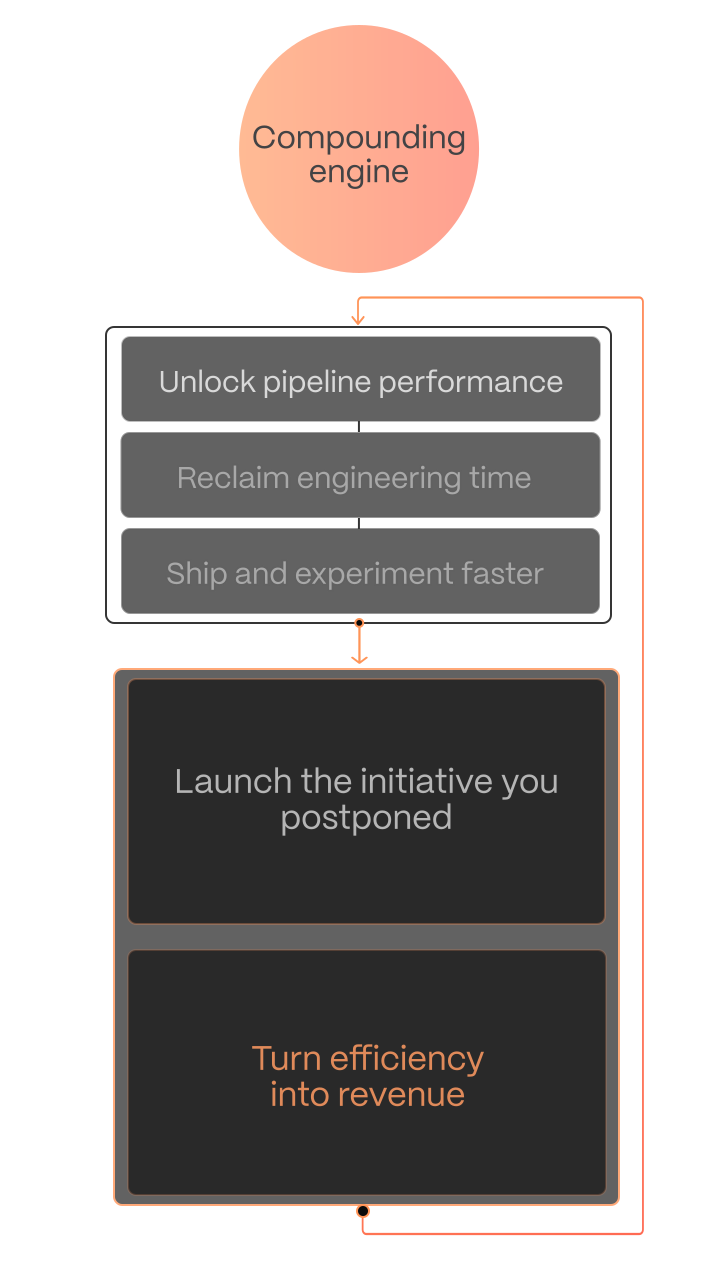
Scale without extra spend
Run more workloads - without adding clusters, capacity, or infrastructure spend.
Free engineers
Move efforts from optimisation to actually shipping pipelines and billable features.
Unlock AI capacity
Launch AI initiatives that were previously too slow or too expensive to run.
Maintain your security posture
Xonai accelerates Spark within existing execution boundaries, using the same security controls already in place. All without expanding access scope or data exposure.


Roll out with confidence.

Deploy the plugin

Validate on real jobs

Reinvest the gains
Xonai for Apache Spark
Frequently Asked Questions
Xonai integrates with open-source Apache Spark up to 3.5.3 and the following data platforms:
- Amazon EMR up to 6.12.0
- Databricks up to 15.4 LTS
- Dataproc 2.0.X, 2.1.X and 2.2.X release line of versions
Note that Xonai is frequently being updated to support new Spark versions.
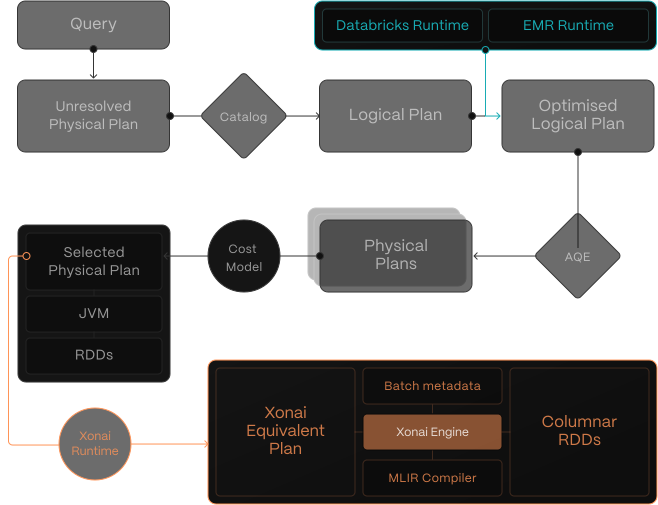
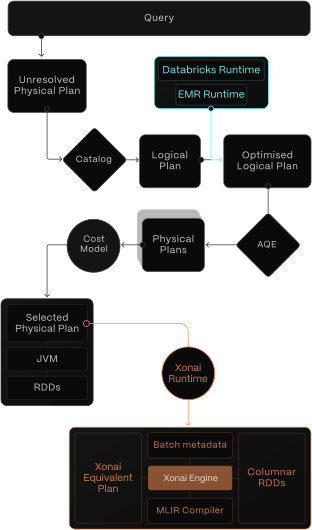
Xonai runs as a Spark 3 plugin. You activate it by adding the Xonai JAR we provide and enabling the spark.plugins property.
When you run a job via spark-submit, Spark still selects the physical plan as usual and Xonai executes an equivalent plan underneath.
Existing solutions tackle cloud spending reduction by improving resource provisioning and/or tuning application parameters, and may only have a one-time benefit.
Xonai accelerates Spark data processing speed far beyond the default Spark engine (Catalyst), and delivers seamless hardware acceleration and reduced resource utilization regardless of how optimally deployed Spark workloads already are.
No. We intentionally designed Xonai to be API-compatible with existing runtimes for Spark, including proprietary ones that may modify query plans to improve performance, such as the Databricks and EMR runtime.
As Spark is an in-memory compute engine, the more time queries spend on doing physical computations between reads and writes, the more benefit they are expected to get by using Xonai. These are typically high compute data transformation jobs with heavy aggregations, joins and sorting stages.


